Car Crash Simulator FlexicX
- 4.7
- Rating
- 1.00M
- Installs
- Free
- Price

 Analysis by App-foxy
I went into Car Crash Simulator FlexicX expecting a simple driving toy, but its appeal is more specific: it turns the impact itself into the main event. This is a free racing game from SIDGIN, LLC, built around watching vehicles react when speed, surfaces, and collisions go wrong. Instead of treating a crash as a brief failure between races, it makes the crash the reason to start the next run.
That difference matters. I would not recommend it to someone looking for a traditional racing career, a deep collection of licensed cars, or a competitive online ladder. I would recommend it to anyone who enjoys testing cause and effect, setting up dramatic accidents, and replaying a short scenario simply to see whether a different approach creates a more convincing result. The game is rated for Everyone, runs on Android 10 or later, and is free to install, although optional purchases range from $1.49 to $99.99 per item.
What happens when you begin with the crash?
The first useful way to approach this game is not to ask, “How do I win the race?” Instead, ask, “What happens if I change the speed, angle, or timing of this impact?” That mindset makes the opening action much more enjoyable. I choose a vehicle, get moving, and look for a situation where the collision will tell me something. A direct hit, a side impact, or a badly judged turn can produce a different visual result, and that uncertainty gives even a short drive a purpose.
You May Also Like

 Blood Strike: 2.5 Anniversary
Blood Strike’s Loadouts Turn Every Drop Into a Tactical Gamble
A close look at Blood Strike’s custom loadouts: how fast access to signature weapons reshapes its battle royale rhythm, rewards preparation, and narrows the gap between fights.

 Pandora - Music & Podcasts
Pandora’s Music Is Easy to Start, but Harder to Recover
Pandora’s strength is its low-effort path from a seed to a station. Its weak spot is how much confidence it asks you to place in connection, setup, and quiet recovery.

 8 Ball Pool
 Is Built on Rivalries, Rematches, and Routine
A close look at the rivalries, rematches, shared routines, and unanswered safety questions that turn a quick pool match into a persistent mobile community.

 Samsung Music
’s Quiet Strength Is Playing What You Already Own
Its reach comes less from spectacle than from dependable access to a personal library. That simplicity is both the app’s strongest retention engine and its ceiling.

 AccuWeather: Weather Radar
AccuWeather Review: A Quick, Clear Forecast for Everyday Decisions
For everyday plans, the best forecast is the one you can understand quickly. AccuWeather makes rain timing, radar, and local conditions easy to act on, with a few trade-offs.

 Hill Climb Racing
Why Hill Climb Racing Still Turns Crashes Into One More Run
A tiny car, a bumpy hill and one more upgrade: Hill Climb Racing keeps resurfacing because its simple chaos makes every near-miss feel personal.
More From Our News Desk



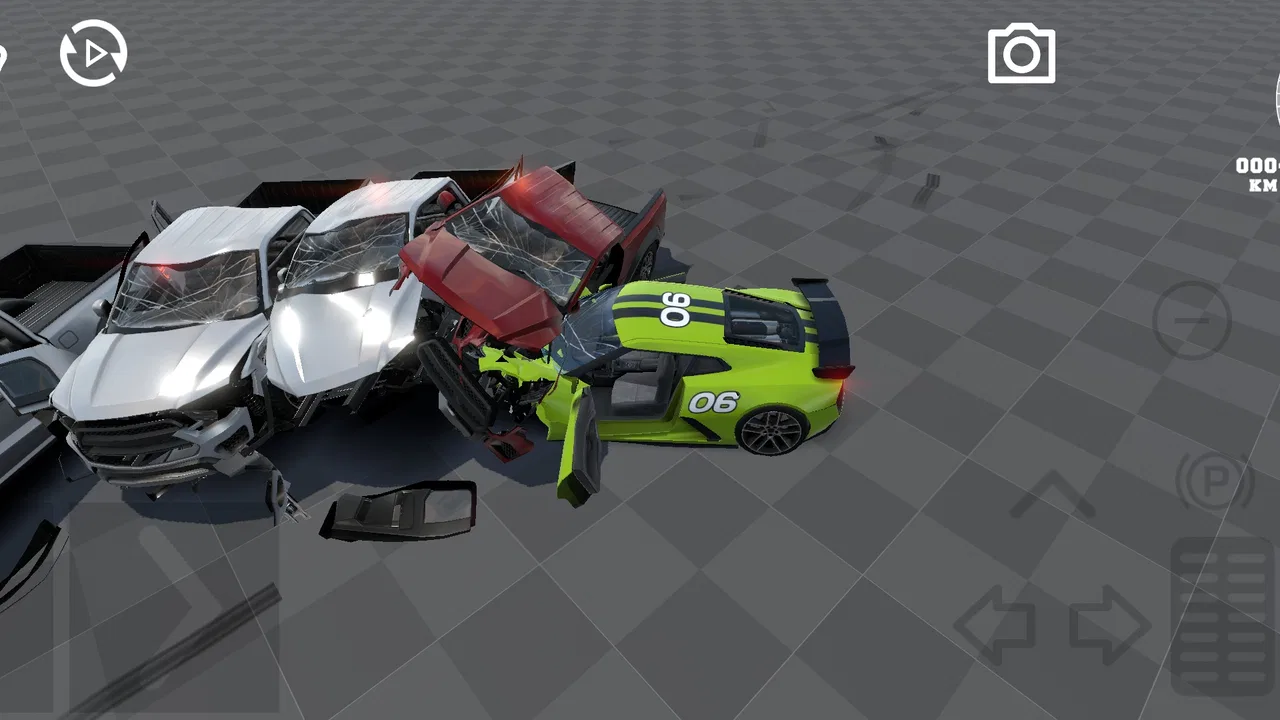
The driving itself is important, but it is mainly the setup for the moment of contact. I pay attention to how much control I still have before an obstacle, whether I can approach from a more interesting angle, and whether a small change in speed makes the resulting damage feel more dramatic. This is where the softbody physics become the central attraction. The vehicle is not merely an object that disappears into an explosion or loses a few points; the deformation is what I am watching for.
That makes the game immediately accessible. You do not need to understand complicated racing strategies before trying it. A new player can start with a straightforward collision, observe the result, reset, and experiment again. The learning curve is less about memorizing tracks and more about developing a feel for how the game represents force. I found that the most satisfying early attempts were not necessarily the biggest crashes. They were the ones where I could see a clear connection between my approach and the final shape of the wreck.
There is also a useful distinction between playing for spectacle and playing for control. If I simply accelerate into whatever is nearby, the result can be entertaining once, but it becomes repetitive quickly. When I deliberately adjust the approach, the same basic environment becomes a small testing ground. That is the first non-obvious strength here: the game rewards observation more than reckless button pressing.
The feedback arrives in the impact
The core feedback rhythm is unusually clear. I act by driving and choosing an approach. The game answers with the movement and deformation produced by the collision. I then judge the result, decide what I would change, and try again. There is no need to wait for a long race to discover whether a decision worked. The feedback arrives almost immediately, which is why the game fits short sessions so well.
For me, the best moments came from comparing two nearly identical attempts. On one run, I might approach too directly and lose the visual drama of the impact. On another, I might change the angle and create a more interesting chain of movement. This turns repetition into a practical tool rather than a sign that the game has run out of ideas. The reset is not just an escape from failure; it is how I conduct the next experiment.
Players who enjoy physics sandboxes will probably understand this rhythm quickly. Players who expect a conventional racing game may find it strange that the crash, rather than the clean finish, is the part worth studying. That is not a flaw in the design so much as a question of expectation. The game’s short description calls it a car crash simulator, and that focus is genuine. It is better approached as a crash-testing playground with driving controls than as a complete substitute for a circuit racer.
I also noticed that the physics make mistakes feel informative. A poor approach does not simply produce a generic “wrong” result. It gives me something to inspect: the direction of the hit, the way the car reacts, and whether the outcome looks different from the previous attempt. The visual response becomes a kind of informal lesson. I can improve my next setup without needing a tutorial to explain every possibility.
A practical tip is to avoid resetting instantly after an impact. I get more from the game when I take a moment to watch the full reaction before starting over. The first contact may not be the most interesting part; the vehicle’s movement afterward can reveal whether the collision had the effect I intended. This is especially useful for players who want to understand the physics rather than simply collect the most spectacular screenshot.
Why the reward is repetition, not a trophy
The reward structure is personal and visual. I am not playing mainly for a traditional podium ceremony. I am playing to create a result that looks different, more controlled, or more dramatic than the previous one. That can sound modest, but it is enough to keep the loop moving when the physics produce varied outcomes.
One session may begin with a simple question: can I make a collision happen at a better angle? The next question becomes more precise: can I reproduce that result, or was it accidental? This shift from surprise to control is where the game becomes more engaging. The first crash gives me a reaction; the second attempt gives me a comparison; later attempts let me refine the setup.
I think this is also why the game has reached a broad audience, with more than one million installs and an average rating of 4.6 from around 56 thousand ratings. Those figures suggest that the basic idea connects with many players, but they should not be read as proof that it replaces every other racing experience. Its appeal is concentrated. If you enjoy watching physics systems respond to your decisions, the concept is easy to understand. If you need structured progression, the same openness may feel thin.
The reward is strongest when I give myself a small objective. For example, I might try to create a clean side impact, compare a low-speed and high-speed approach, or find a way to make the vehicle rotate after contact rather than stop immediately. These are not formal missions I am claiming the game provides; they are useful ways to play what is there. Setting a personal test prevents the experience from becoming a sequence of random crashes.
Another helpful workflow is to treat each run as a three-step experiment: choose one variable, observe the result, and change only that variable on the next attempt. If I change speed, angle, and direction at once, I cannot tell what caused the difference. Keeping the test narrow makes the physics easier to read and gives the reset a real purpose. This is the kind of approach a generic store description would not explain, but it makes the game considerably more satisfying.
The free entry point is convenient, especially for casual players who want to try the concept without committing to a purchase. The presence of in-app purchases means some players will need to decide how far they want to go without spending. I would treat the free version as a chance to evaluate whether the crash-testing loop suits you before considering any optional purchase. For a game built around experimentation, that trial period is valuable because the appeal becomes clear within a few short sessions.
Resetting changes the meaning of failure
In an ordinary racing game, a crash usually means lost time, a damaged position, or the end of a serious attempt. Here, the reset is part of the play pattern. I can treat a failed impact as useful information, start again, and immediately test a different idea. That removes much of the frustration that comes from making a mistake, but it also means the game depends on my willingness to invent new tests.
This is where the experience can divide players. Someone who enjoys open-ended play may see the reset as freedom. Someone who needs a clear campaign or a steadily rising challenge may see it as a lack of direction. I would skip this game if my main goal were to unlock a long sequence of racing events, compete against ranked opponents, or build a detailed motorsport career. A conventional racing title would be a better choice in those situations because it gives every mistake a clear competitive consequence.
For everyday use, I can imagine playing it during a short break. I might have only a few minutes, choose one collision idea, make several attempts, and stop after finding a result that feels convincing. There is no need to remember a complicated storyline or reconstruct a long race after putting the phone down. That makes it a good fit for quick, hands-on sessions, provided I am in the mood for experimentation rather than progression.
On the other hand, the reset loop can expose the game’s limitations over a longer sitting. Once I have tested the most obvious approaches, I need to supply my own variety. The physics can keep the results interesting, but they do not automatically create a complete set of goals. I recommend taking breaks or switching the type of experiment instead of repeating the same head-on collision for an hour. The game is more enjoyable when I leave with a question for the next session.
It is worth watching the device experience as well. A physics-heavy crash can be visually busy, and older or less capable phones may not provide the same smooth feel as newer hardware. I would not promise identical performance across every Android device simply because the minimum operating system is Android 10. If responsiveness matters to you, test the free version on your own phone before deciding whether it deserves regular play.
The current version is 0.99.3.148, so I would approach it as a game that may still feel like an evolving project rather than a fully settled racing package. That does not make it unsuitable, but it reinforces the importance of judging it by its central loop. If the act of setting up and observing crashes already entertains you, the experience has a solid reason to exist. If you are waiting for layers of traditional racing content, the current form may not meet your expectations.
Who gets the most from the physics?
I see three especially good audiences for this game. The first is the casual player who likes immediate action and does not want a long tutorial before reaching the interesting part. The second is the physics enthusiast who enjoys comparing outcomes and looking for patterns in movement. The third is the creative player who treats a collision as a small scene to arrange, observe, and refine.
It can also work for younger players because the content rating is Everyone, though I would still let individual families decide whether crash-focused play fits their preferences. The presentation is centered on vehicles and simulated impacts rather than the competitive pressure found in many racing games. That makes it less stressful than a serious time trial, even though the visual subject is still car damage.
I would be more cautious about recommending it to someone who wants realistic road driving in the everyday sense. The word “realistic” here is most useful when discussing the vehicle response and softbody deformation, not as a promise that the game recreates every part of real-world driving. It is a controlled simulation built for collisions. If you want traffic rules, navigation, licensed racing events, or a broad driving career, another type of game will suit you better.
Compared with standard arcade racers, this game gives up speed-based competition in exchange for impact-based curiosity. Arcade racers usually make the finish line the reward, while FlexicX makes the result of the collision the reward. Compared with driving simulators, it is less concerned with disciplined road behavior and more interested in what happens when that discipline breaks down. Compared with physics sandboxes, its identity is narrower but easier to grasp: cars, movement, contact, and the urge to try again.
That narrower focus is a strength when I want a quick experiment, but a weakness when I want a complete game night. I would choose a conventional racer for a group competition and choose this one when I want to explore a physical reaction on my own. The two experiences are not really substitutes, even though both involve cars. Understanding that distinction before downloading will save you from expecting the wrong kind of entertainment.
The small decisions that improve each attempt
My first recommendation is to change one thing at a time. Speed, approach angle, and timing all affect the result, and changing everything together makes the outcome difficult to interpret. A controlled comparison gives the game more depth without requiring any special mode or external tool. It also makes a short session feel purposeful.
Second, use the aftermath as part of the test. I do not judge an impact only by the first visible deformation. I watch how the vehicle continues to move and whether the final position tells me something about the force and direction involved. This is an easy detail to overlook, but it is often where the physics feel most convincing.
Third, save your most interesting idea mentally before resetting. If a run produces a surprising result, I try to recreate the setup rather than immediately chase a bigger crash. Reproducibility is a better challenge than random destruction. It turns an accidental moment into something I can understand and improve.
Finally, give yourself a stopping rule. I might stop after producing three meaningfully different outcomes or after finding one result I can reproduce. Without a boundary, the reset loop can become mindless. With one, the game becomes a compact laboratory that I can return to whenever I want a few minutes of tactile experimentation.
My verdict on the complete loop
Car Crash Simulator FlexicX works because its action, feedback, reward, and reset all point in the same direction. I drive toward a situation, see the physics answer, enjoy the visual result, and restart because I have another variable to test. That is a clean loop, and it explains why the game can be entertaining even when a run lasts only a short time.
It is not the right choice for players who need a rich racing campaign, competitive rankings, or a clear stream of formal objectives. Its long-term value depends on whether you enjoy creating your own challenges. The lack of a conventional finish-line purpose may feel refreshing to one player and empty to another. I would make that decision based on your preferred kind of replayability, not on the fact that it belongs to the racing category.
SIDGIN, LLC has built a focused experience rather than an all-purpose driving game. The free price makes it easy to test, the Everyone rating keeps the audience broad, and the current release, version 0.99.3.148, gives Android users on Android 10 or later a straightforward way to see whether the physics appeal to them. Optional purchases are present, so I would keep spending controlled until the basic loop has earned your interest.
After spending time with it, my honest recommendation is simple: try it if the thought of setting up a collision sounds more appealing than crossing a finish line. This is a game about turning failure into the next experiment, and that idea is carried through consistently. I keep coming back not because every crash is automatically exciting, but because one small change can make the next result worth watching.
FAQs for Car Crash Simulator FlexicX
01What is Car Crash Simulator FlexicX and what makes it unique?
Car Crash Simulator FlexicX is a dynamic simulation game designed to deliver realistic car crash scenarios. Its uniqueness lies in its advanced physics engine, which accurately replicates the destruction and impact of crashes. The game offers a variety of vehicles and environments, providing an immersive experience for users who enjoy detailed simulations.
02Is Car Crash Simulator FlexicX free to download and play?
Car Crash Simulator FlexicX is available as a free download with optional in-app purchases. While the core gameplay is accessible without cost, additional features, vehicles, and customization options can be unlocked through purchases. This setup allows users to enjoy the game while having the flexibility to enhance their experience.
03What are the system requirements for Car Crash Simulator FlexicX?
To run Car Crash Simulator FlexicX smoothly, Android users need a device with at least Android 5.0, while iOS users require iOS 10.0 or later. The game is optimized for devices with mid to high-range specifications to ensure the best performance in terms of graphics and simulation accuracy. Sufficient storage space is also recommended for additional content.
04Does Car Crash Simulator FlexicX support multiplayer modes?
Currently, Car Crash Simulator FlexicX is designed as a single-player experience. While it focuses on providing realistic crash simulations and individual challenges, the developers are open to feedback and may consider adding multiplayer features in future updates. Stay tuned to their official channels for announcements.
05Are there any safety features or parental controls within Car Crash Simulator FlexicX?
Car Crash Simulator FlexicX includes content suitable for a mature audience due to its realistic depiction of crashes. Parents can utilize device-level controls to manage app usage and access. The game developers also provide a disclaimer about the realistic nature of the simulations, ensuring users are aware before gameplay.
Pros
- Realistic crash physics enhance gameplay.
- Wide variety of vehicles to choose from.
- Intuitive controls for easy navigation.
- Stunning graphics with detailed environments.
- Frequent updates with new features.
Cons
- Occasional in-app purchase prompts.
- Some vehicles locked behind paywalls.
- Ads can be intrusive at times.
- Requires a stable internet connection.
- High battery consumption on longer play.

Car Crash Simulator FlexicX
Gallery